Cool Things To Do in Balboa Park, San Diego
Balboa Park Is One of the Best Things To Do in San Diego Whether on Vacation or Staycation
Balboa Park is one of those places that makes San Diego feel like San Diego. Just minutes from downtown, the park brings together gardens, museums, trails, historic architecture, and wide-open spaces in one enormous destination. Whether you’re visiting San Diego or planning a local staycation, you could easily spend an entire day here and still have plenty of time for another visit.
We’ve been visiting Balboa Park as a family for years, from bringing the kids to see the koi in the Lily Pond to wandering the gardens, catching performances and simply exploring the architecture. One of our most memorable visits, though, came during the summer of 2020, when the usually busy walkways were unusually quiet.
With museums and indoor attractions temporarily closed at the time, we spent the day outside with our cameras. What started as an unusual visit became a chance to notice parts of Balboa Park we’d sometimes hurried past, like the gardens, ornate buildings, hidden corners, and little details that make this much more than a collection of museums.
Today, those photographs offer a slightly different look at Balboa Park, while years of visits give us plenty to share about what is worth seeing when you go.
All photos are by Savvy Cali Girl, unless otherwise noted.
How Balboa Park Began
From an Empty Plateau to Exposition Worthy
The shining jewel we now call Balboa Park was originally just City Park. In 1868, civic leaders set aside a 1,400-acre tract as a public park. Balboa Park didn’t really begin to come together until twenty years later.
The current name, Balboa Park, was chosen as a result of a naming contest for the explorer Vasco Núñez de Balboa. He was the first known European to spot the Pacific Ocean while on an expedition. To be fair, Balboa Park was a more memorable name than the original name, City Park.
In 1892. Kate Sessions, a local horticulturist, offered to donate 100 trees per year in exchange for using the land as a nursery. She also offered to do plantings for other San Diego sites. She later earned the title “The Mother of Balboa Park” at the 1935 California Pacific International Exposition because of her horticultural impact on the park.
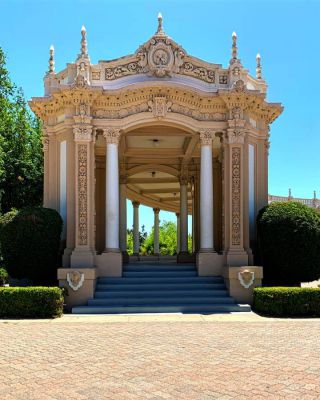
The Panama-California Exposition of 1915–16 and the California Pacific International Exposition of 1935–36 transformed the park even further. Many of the ornate buildings and public spaces visitors associate with Balboa Park grew out of those two events, including the Spanish Colonial Revival architecture that still gives the park so much of its character today.
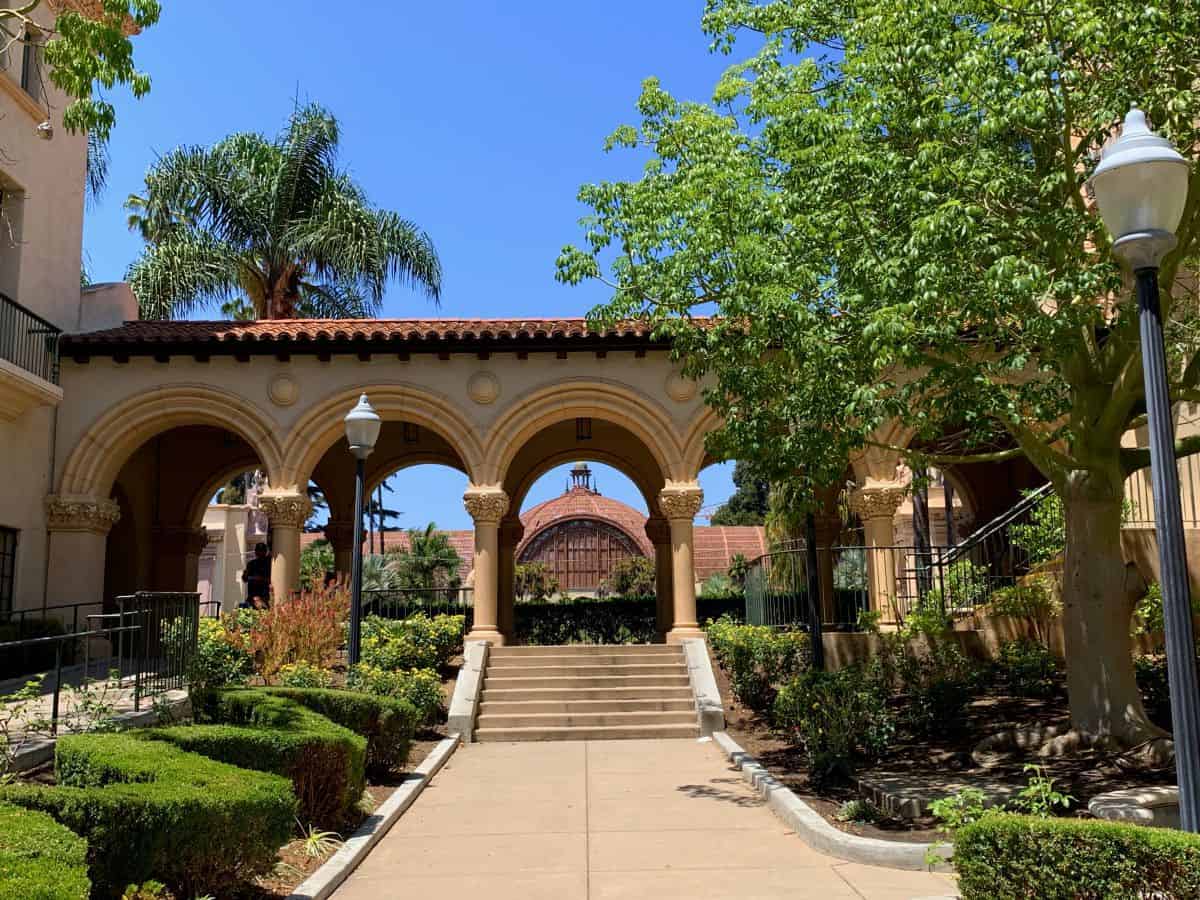
Even if you never step inside a museum, you can spend hours wandering among these buildings, gardens and covered walkways. Having traveled through Europe and seen centuries-old architecture, I’ve always appreciated having a place at home that feels as though it carries a little history of its own.
Pretty Pockets Throughout the Balboa Park Gardens
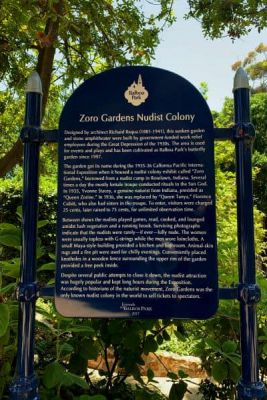
Zoro Gardens, Nudist Colony Turned Butterfly Garden
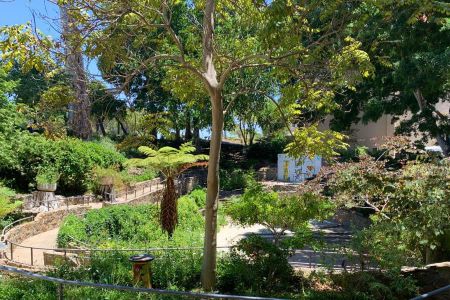
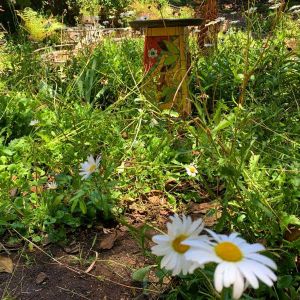
Our first stop was Zoro Gardens. It is a gorgeous, secluded, sunken area with butterfly-friendly plantings. We tried our best to capture the butterflies with the lens but all the creatures were all blurry. This is definitely a skill to be learned in the future! We also featured an entire post on the Monarch Butterfly Migration in California if you want to learn more.
Interestingly, Zoro Gardens does have an infamous past. It started as a nudist colony created for the 1935 Exposition! The nudists actually had shows and charged for entry, the only nudist colony known to have done this in the U.S..
The Botanical Garden & Lily Pond
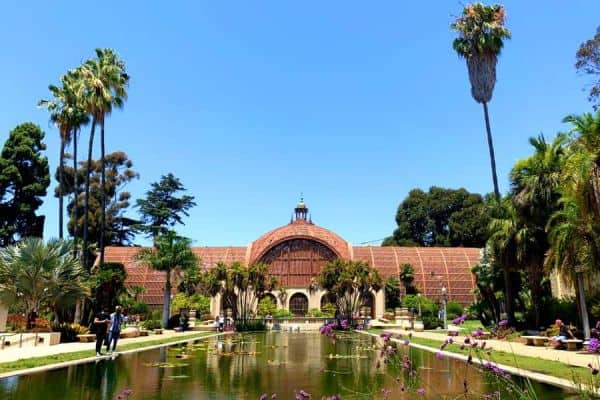
Everyone, and I do mean everyone, seems to make a stop at the Lily Pond in Balboa Park. Getting a photograph without visitors is practically an Olympic event. Even during our unusually quiet summer visit in 2020, it took nearly twenty minutes to capture a shot with so few people.
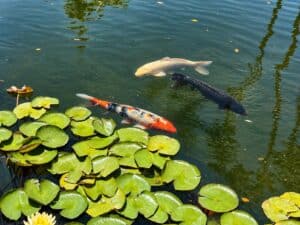
We’ve brought the kids here since they were little, watching the koi cruise beneath the lily pads and counting how many different colors we could spot. It’s one of those simple family traditions that never really gets old. Even today, my husband and I try to spot as many as we can or spy the largest.
The Botanical Building and adjacent Lily Pond date back to the 1915 Panama-California Exposition. Following an extensive restoration, the building reopened in December 2024 with its historic architectural details beautifully restored. Inside, visitors can explore more than 2,100 plants, including orchids, ferns, palms, and tropical varieties.
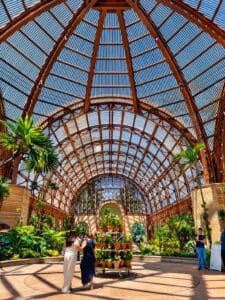
Best of all, admission to the Botanical Building is free. Whether you’re interested in the plants or want to check the box for one of San Diego’s most recognizable landmarks, it’s an easy stop when you explore Balboa Park.
Check the official Botanical Building information for current visiting details.
A San Diego Yokohama Friendship Garden
The Japanese Friendship Garden is one of those unexpected pockets of beauty you could easily miss. Don’t be fooled by the modest entrance. Once you begin descending into the garden, you’ll discover just how expansive it really is.
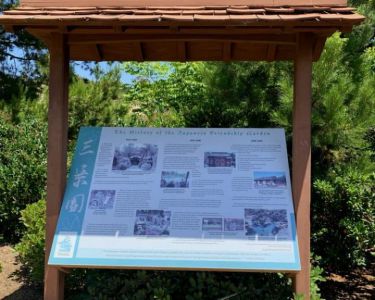
Celebrating the friendship between San Diego and its sister city, Yokohama, Japan, established in 1957, this 12-acre retreat features winding pathways, koi ponds, waterfalls, cherry trees, and traditional Japanese landscaping. It’s a peaceful escape from the busier areas of Balboa Park. Most of our earlier family photographs feature the kids, whom we try not to “out” on the internet, so I’ve included a few exterior photographs instead.
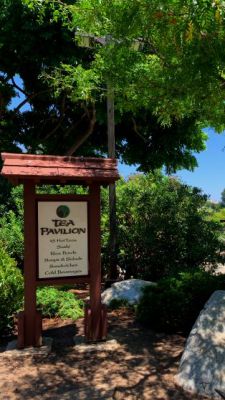
Admission is required. Visit the official Japanese Friendship Garden & Museum website for current hours, admission prices, and events. If you visit in spring, the garden’s cherry blossom grove is particularly beautiful. The garden also hosts an annual Cherry Blossom Festival that celebrates the season with Japanese cultural performances, activities, and food.
A Walk Among Cactus
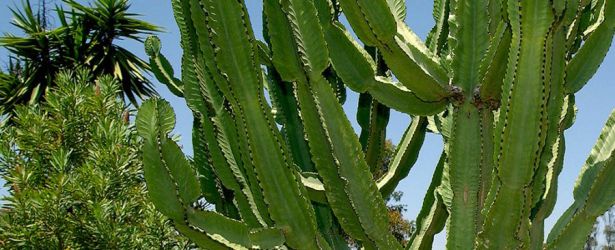
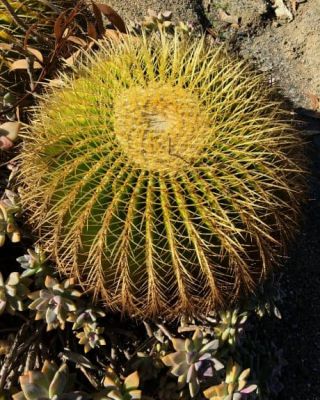
Another unexpected but cool addition to Balboa Park is a vibrant cactus garden. It’s located on a hillside on the western outskirts of the park. Because of its elevation, you can catch amazing downtown views while you take in the varieties of cacti. I won’t spoil the surprise, but don’t miss this part of the park at sunset, trust me!
Performers Are Part of the Experience at Balboa Park
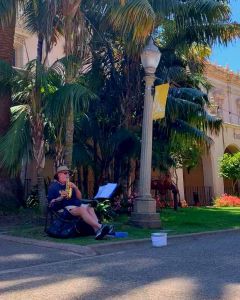
Street performers are part of the fun at Balboa Park. From musicians and magicians to artists and entertainers, there’s often something happening around the next corner.
During our unusually quiet visit in 2020, we came across a musician playing “Itsy Bitsy Spider” for a delighted toddler. I think I was just as entertained as his little audience! On another visit, we stopped to listen to a didgeridoo performance that kept us captivated for quite some time. Not something you hear every day in San Diego.
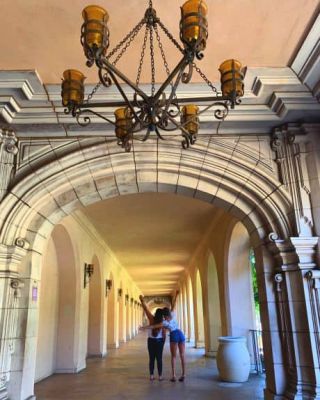
Even between performances, simply wandering the park’s beautiful corridors is an experience. The ironwork, stone columns, and cool breezes make it easy to slow down and enjoy the surroundings.

California’s History Reflected in the Balboa Park Buildings
One of my favorite things about Balboa Park is its architecture. From elaborate Spanish Colonial Revival buildings to more modern museums, there’s plenty to admire before you even step through a doorway. Many of the park’s most recognizable landmarks were created for its historic expositions, including this next stop.
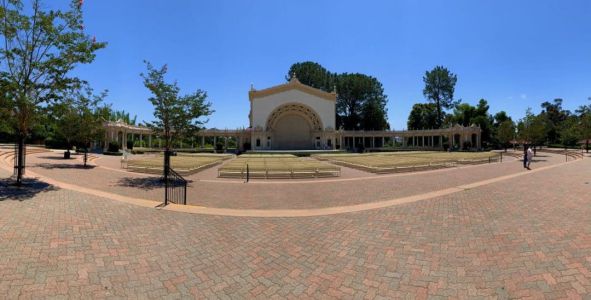
The Spreckels Organ Pavilion
Built for the 1915 Panama-California Exposition, the Spreckels Organ Pavilion was a gift to San Diego from brothers John D. and Adolph Spreckels. It’s home to the world’s largest outdoor pipe organ and remains one of the park’s most impressive landmarks.
Even better, you can enjoy free organ concerts every Sunday at 2 p.m., along with special performances throughout the year. We’ve braved the winter chill for holiday concerts ourselves. One particularly cold evening, those metal seats proved a little too much for our youngest, who nearly put on a performance of her own. We made a rather hasty exit!
The pavilion is also a favorite backdrop for photographers, from engagement shoots and prom pictures to those pesky bloggers.
Check the Spreckels Organ Society concert schedule before your visit.
San Diego Museum of Art
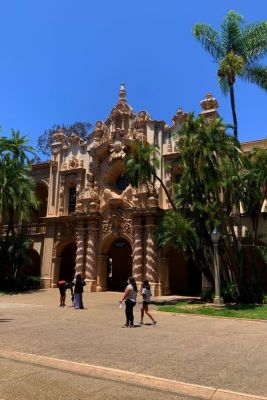
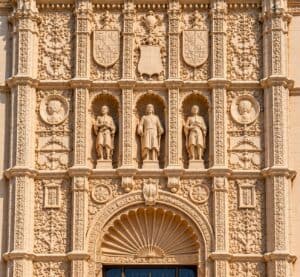
If I had to pick a single building as my utter favorite, the San Diego Museum of Art would top that list. The exterior is highly decorated beautifully from top to bottom. It reminds me of churches you might find on the Iberian Peninsula. There are full-body sculptures of the artists Velázquez, Murillo, and Zurbarán.
My images were blurry, but I tracked down this close-up photo. If you look closely, you can see shields, ships, and more. Every inch is covered with iconography.
San Diego Air & Space Museum
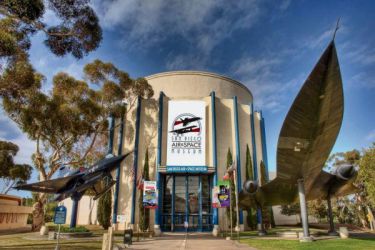
San Diego has a long aviation history. It’s only fitting that Balboa Park has a museum dedicated to flight and space exploration. Housed in the Art Deco Ford Building, the museum offers a refreshing contrast to the park’s Spanish Colonial Revival architecture. Two historic aircraft outside the entrance are also hard to miss!
Inside, visitors can explore aviation history, spacecraft, interactive exhibits, and educational programs. It’s a great stop for families, particularly if you have a future engineer, pilot, or astronaut in the house. Visit the official San Diego Air & Space Museum website for current exhibits, admission, and family programs.
San Diego Air & pace Museum Website
Above All, The California Tower
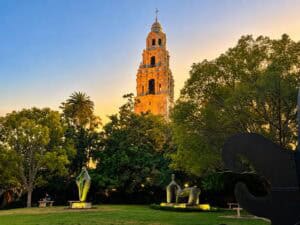
Saving one of my favorites for last, the California Tower rises above Balboa Park and can be spotted from seemingly everywhere. Built for the 1915 Panama-California Exposition, it’s one of San Diego’s most recognizable landmarks.
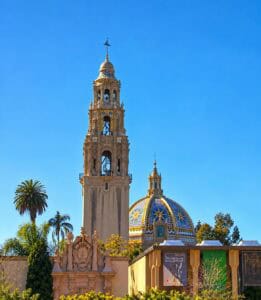
The architecture is quite a mix, with Baroque, Plateresque, Churrigueresque, Rococo, and even Gothic influences. I particularly love the colorful tiled dome. It sparkles in the sunlight, and at sunset, the backdrop is drop-the-mic cool!
You can also climb the tower on a guided tour through the Museum of Us. After 125 steps, visitors are rewarded with panoramic views stretching from the Pacific Ocean to the mountains. Separate tour admission is required, and children must be at least six years old.
Check the official California Tower tour information for current schedules, admission, and reservations.
There Is More, So Much More
We’ve barely scratched the surface of Balboa Park! Beyond the gardens and architecture, there are museums, restaurants, walking trails, and plenty of little corners worth exploring. And did I mention the San Diego Zoo is right next door?
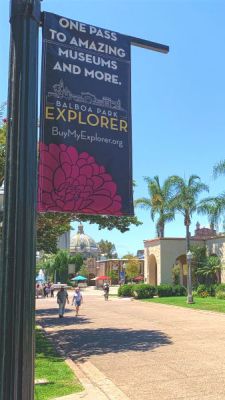
If you’re planning to visit several museums, check out the Balboa Park Explorer Pass before purchasing individual tickets. It may save you a few dollars, especially if you’re making a full day of it.
One of the things I love most about Balboa Park is that you don’t need an elaborate itinerary to enjoy yourself. We’ve been visiting for years, and there’s always something new to discover. Pack comfortable shoes, leave yourself plenty of time to wander, and don’t forget your camera. Trust me, you’ll use it!
And if you’re looking for a little inspiration before your next California adventure, take a peek at our Best California Destinations Offering Virtual Tours. It’s a fun way to explore a few more places from home.